

Key highlights:
- Evolving Macro Environment: Volatile, supply-driven inflation alongside rising demand elevates the strategic role of commodities in diversified portfolios.
- Commodities play distinct roles: They provide diversification, hedge unexpected inflation, and offer exposure to real-economy demand.
- Implementation matters: Portfolio outcomes vary depending on benchmark choice, return drivers, allocation from a whole portfolio view.
Introduction: A potential blind spot in modern portfolios
Institutional portfolios are more diversified than ever, yet many remain calibrated to a macro regime that no longer prevails. While investors increasingly recognize the limits of the traditional 60/40 framework, portfolio construction has been slower to adjust to an environment defined by the following market themes:
1. Elevated geopolitical risk
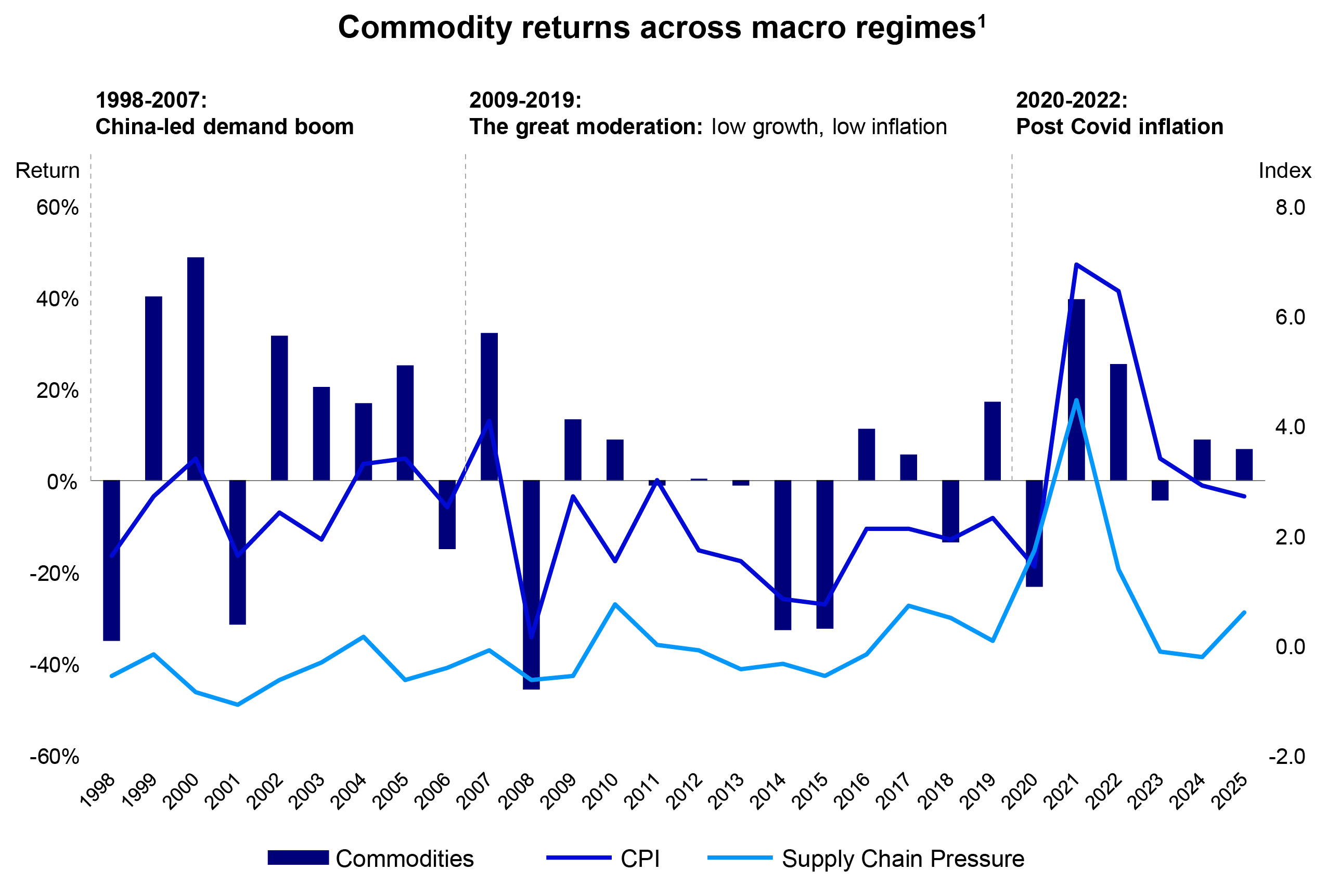
In an increasingly fragmented world, geopolitical shocks now propagate through commodity markets faster than through financial ones—often reaching inflation and real activity before portfolios have time to adjust.
2. Recurring supply-driven inflation
The bigger inflation risk today is not its level, but its unpredictability—driven increasingly by supply constraints that transmit directly into prices and challenge conventional asset frameworks.
3. A renewed dependence on physical infrastructure.
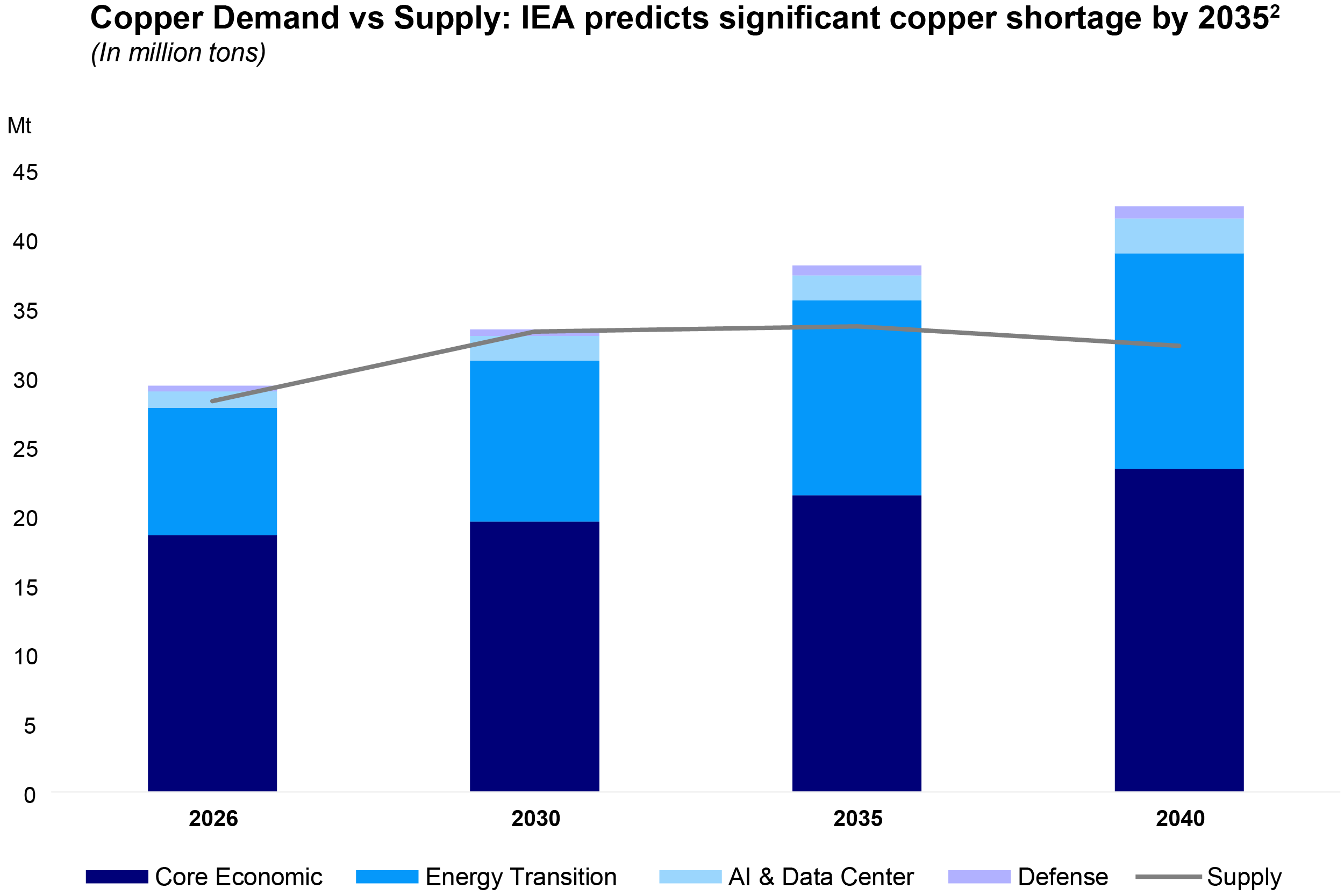
AI may be digital, but the growth it drives is deeply physical: surging demand for energy and critical metals is colliding with tightening supply, reinforcing the strategic relevance of commodities in portfolios.

Although investors have a growing array of potential diversifiers to consider, against the abovementioned market backdrops, we believe commodities warrant renewed attention— not as a tactical hedge, but as a strategic source of diversification tied directly to real-economy dynamics. The key question is not whether commodities belong in portfolios today, but how they could be thoughtfully incorporated from a whole-portfolio framework.
The Role of Commodities in Portfolios
Commodities are often evaluated through a narrow lens. A more useful framework is to consider the distinct roles they can play within a broader portfolio.
1. Diversification – through different economic exposure
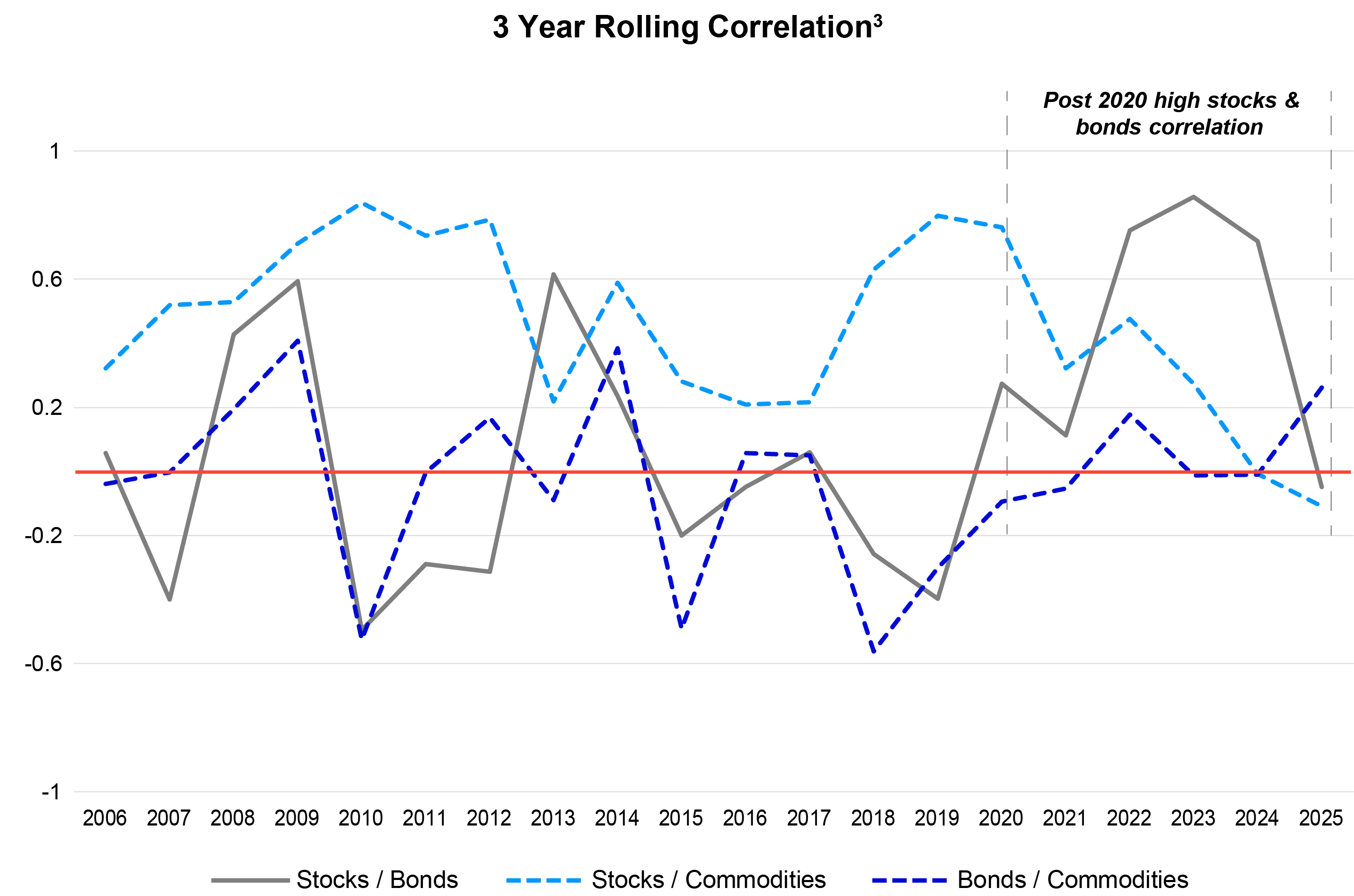
Commodities have historically exhibited low correlation with equities and slightly negative correlation with fixed income. However, their diversification benefit is not simply statistical – it is structural.
Commodities are directly linked to input costs, resource scarcity, and supply-demand imbalances, rather than corporate earnings or interest rates. As a result, they tend to respond differently to macroeconomic shocks – particularly those originating in the real economy.
2. Inflation Hedging – especially against surprises
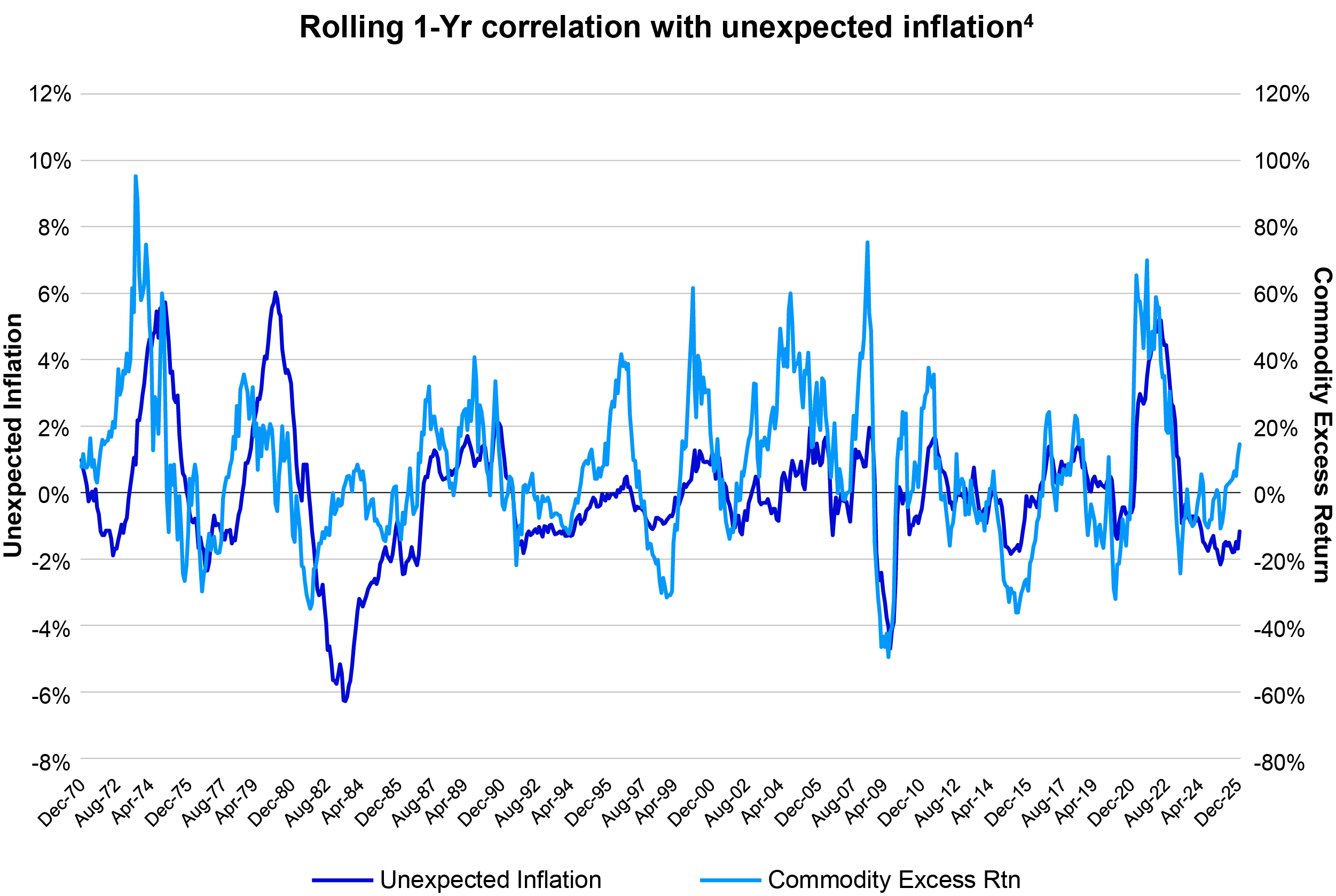
Commodities have demonstrated a strong and consistent relationship with unexpected inflation. Unlike equities, which may outpace inflation over long horizons, commodities tend to react more immediately when inflation surprises to the upside. This has made them particularly effective as a portfolio insurance mechanism against short-term inflation shocks. This is particularly important for investors who are near or in retirement and need to mitigate risk of inflation eroding their purchasing power.
3. Exposure to global growth and real-asset demand
While equities reflect profit growth and valuation dynamics, commodities offer exposure to a different dimension of growth – one tied to physical throughput rather than financial performance. This makes them particularly relevant in environments where growth is driven by capital intensive and resource-heavy investment cycles. However, commodities are not a pure “growth asset.” Their returns are influenced by both demand and supply dynamics, and can be volatile. Their value lies in providing complementary exposure to global economic activity.
Portfolio Construction Considerations
The strategic case for commodities maybe compelling, but implementation is critical.
Not All Commodity Exposure is the Same
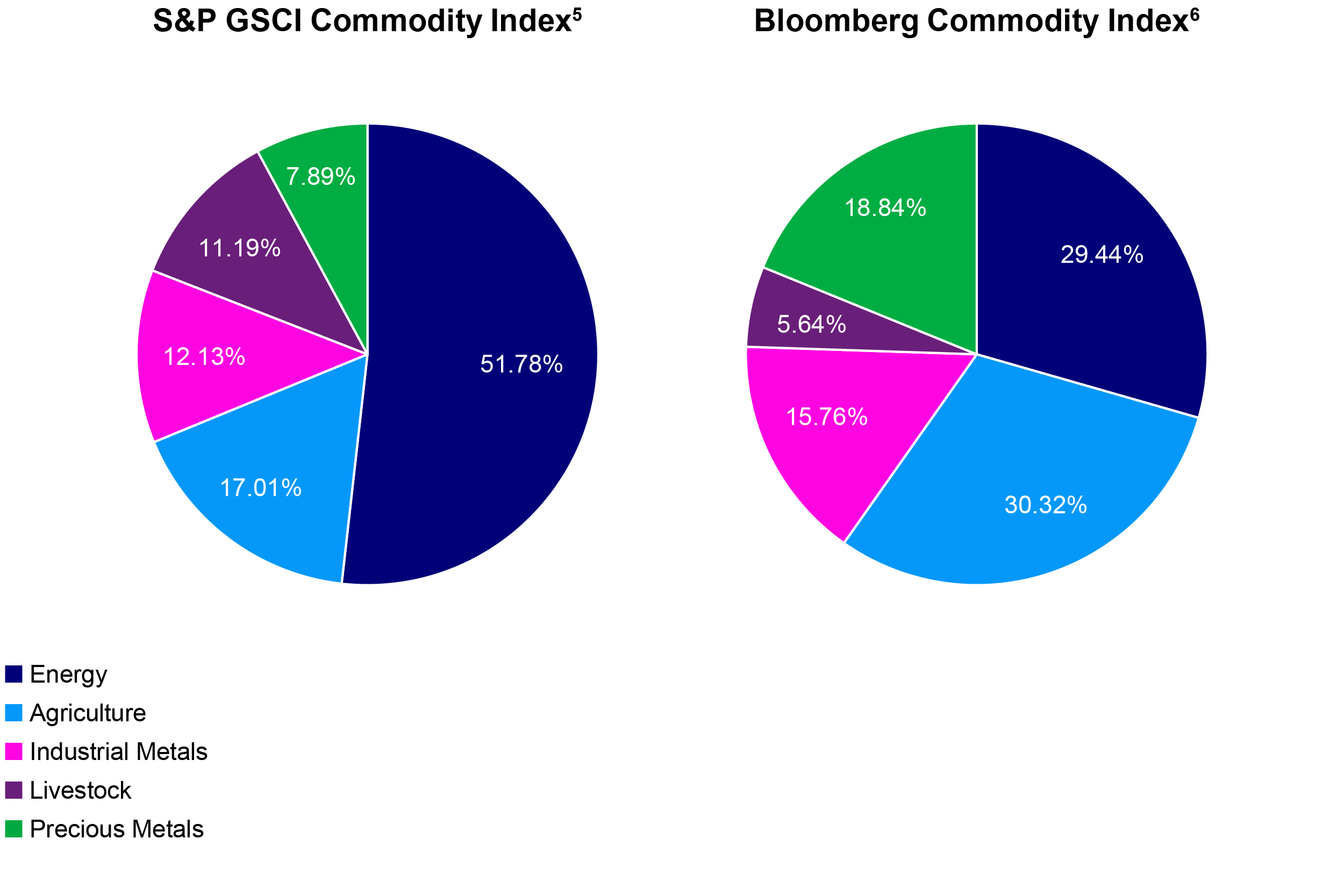
A broad index such as the Bloomberg Commodity Index is substantially more balanced across sectors, with energy representing under a third of its target weight in 2026. By contrast, the S&P GSCI remains heavily dominated by energy, with energy exceeding half of its target weight. An investor allocating to “commodities” through different benchmarks may unknowingly be making very different macro bets, particularly on energy.
Understanding Return Drivers
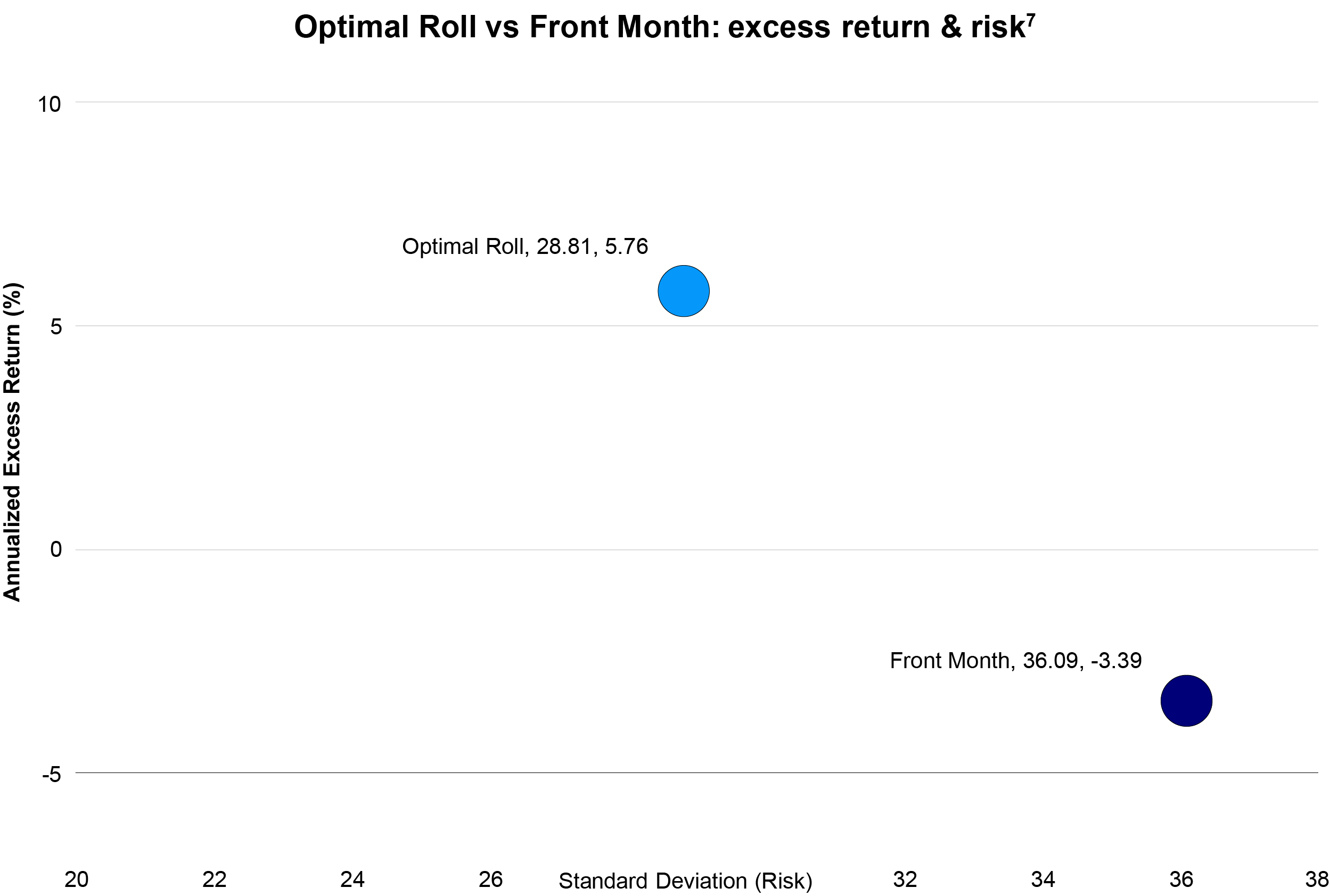
Commodity futures returns come from three sources: collateral return, spot price changes, and roll return. Historically, much of the long-run positive return has come from spot movements combined with collateral yield, while roll returns have often been a headwind. Curve structure, contract selection, and rebalancing methodology can materially affect outcomes, reinforcing that implementation details matter as much as the asset class label.
Sizing from a Whole Portfolio View
The role of commodities should be clearly defined within the portfolio. In practice, commodities tend to serve one or more purposes in institutional portfolios.
- Hedging against inflation: designed to mitigate unexpected inflation risk
- Diversifier within the inflation sensitive asset basket: complementing exposures such as TIPS, Real Estate, and Infrastructure
- Tactical macro allocation: adjusted dynamically based on evolving macro conditions
The appropriate sizing of a commodity allocation will depend on its intended role. Notably, because commodities can exhibit high sensitivity to inflation, relatively modest allocations may have a meaningful impact on portfolio characteristics.
Conclusion
The question is not whether commodities will outperform next quarter or recreate the supercycles of the past. It is whether portfolios designed for a disinflationary, globalization heavy regime are adequately prepared for one characterized by geopolitical fragmentation, supply side inflation risk, and physically intensive growth.
In such an environment, commodities may merit reconsideration—not as a relic of an old cycle or a substitute for equities, but as a strategic tool for diversification and resilience when shocks originate in the real economy rather than financial markets.
The strategic case for commodities maybe compelling, but implementation is critical.
Authors

Peter Miller, CFA, FSA Head of Client Investment Solutions, North America
Rachel Zou, CFA Portfolio Strategist, North America
Important Information: Notes
1. Sources: Morningstar, Commodity return is represented by the S&P GSCI TR Index. Federal Reserve Bank of New York, Global Supply Chain Pressure Index.
2. Source: S&P. Forward-looking statements are not a guarantee of future results. They involve risks, uncertainties and assumptions, there can be no assurance that actual results will not differ materially from expectations.
3. Sources: Morningstar. Equity, bond, and commodity returns are represented by the S&P 500 TR index, Bloomberg US Agg Bond TR index, and the S&P GSCI TR index, respectively.
4. Sources: Bloomberg L.P., DataStream and Invesco analysis. Unexpected inflation is defined as year-over-year inflation relative to its 5-year moving average. Commodity excess return is the rolling 12-month excess return index using Deutsche Bank Liquid Commodity Index from its inception in 1988 and S&P GSCI Index prior. Period covered: 12/31/70 to 03/31/26. Past performance is not a guarantee of future results.
5. Sources: Bloomberg, 2026 target weight
6. Source: S&P, 2026 target weight
7. Sources: Invesco analysis and DataStream. Data from 01/31/00 to 12/31/25. For illustrative purposes only. Front Month return is the S&P GSCI Crude Oil Official Close Index excess return. Optimal Roll return is the Bloomberg Roll Select WTI Crude Oil Subindex excess return. Past performance is not a guarantee of future results.
Important Information
All material presented is compiled from sources believed to be reliable and current, but accuracy cannot be guaranteed. This is being provided for informational purposes only, is not to be construed as an offer to buy or sell any financial instruments and should not be relied upon as the sole factor in any investment making decision. This should not be considered a recommendation to purchase any investment product. As with all investments, there are associated inherent risks.
This does not constitute a recommendation of any investment strategy for a particular investor. Investors should consult a financial professional before making any investment decisions if they are uncertain whether an investment is suitable for them. Please read all financial material carefully before investing. For additional information about these strategies, contact Invesco.
Past performance is not indicative of future results.An investment cannot be made into an index. Portfolio holdings and characteristics are subject to change.There is no guarantee that any trends shown herein will continue. Diversification does not guarantee a profit or eliminate the risk of loss.
The opinions expressed are based on current market conditions and are subject to change without notice. These opinions may differ from those of other Invesco investment professionals.
Invesco Advisers, Inc. is an investment adviser; it provides investment advisory services to individual and institutional clients and does not sell securities.
Investment risks
Commodity investments can be volatile and may be affected by market conditions, geopolitical events, supply and demand dynamics, and changes in regulation. Investors may lose all or part of their investment.