

Investors betting on the companies building the infrastructure to power AI may be underestimating the staying power of political risk.
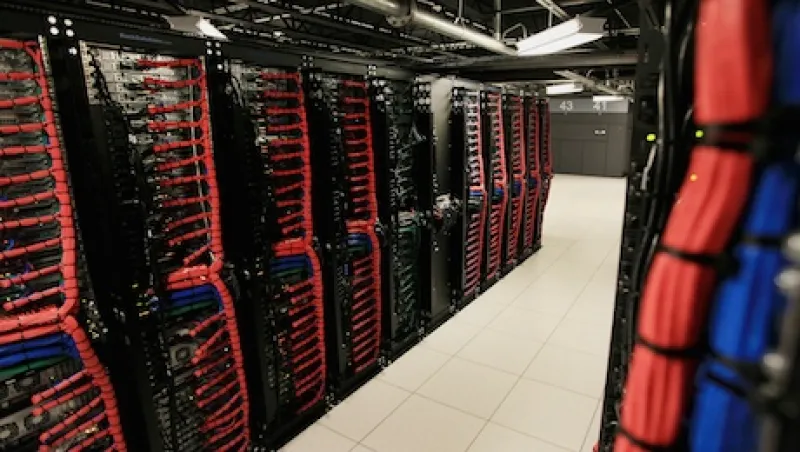
As data centers require more electricity, cooling, water, land, and transmission capacity, resistance to them is growing and that could come at a cost to investors. Tina Byles Williams, founder, CEO and CIO of Xponance, says the political challenges facing them are here to stay, in part because of the enormous scale of the centers.
“I don’t see them going away,” Byles Williams told Institutional Investor.
The founder of the 30-year-old investment firm explained that the investment case for companies that provide the ‘picks and shovels’ is strong, but so are the constraints. And investors can no longer ignore them.
Byles Williams also cited journalist Karen Hao’s book The Empire of AI, which parallels today’s competition for AI infrastructure and resources in South American and Africa with late-19th-century imperial competition, when major powers competed for land, raw materials, and strategic influence abroad. But she noted some key differences. “We’re not in the 19th century. People have a voice. Even if they don’t have a voice, they have iPhones, they can create movies and documentaries,” she said.
For example, protests and legal challenges halted plans for a proposed data center from Google in Chile in 2024 once nearby residents learned that it could use more water in a year than Cerrillos’s entire population of roughly 88,000 people (Chile has been suffering from prolonged drought).

Pushback may be growing, but AI compute still dominates capex, with PwC estimating global data center expenditure to reach nearly $32 trillion through 2050. And because GPUs only last for about six years, that creates a built-in spend. While demand remains strong, PwC notes that power availability, data sovereignty requirements, and chip trade flows will determine which regions benefit.
Byles Williams explained that AI is not the only thing boosting infrastructure right now: It’s also geopolitical uncertainty. In this more uncertain environment, the world is moving away from efficiency and towards redundancy and workarounds — all of which leads to more infrastructure builds. It also leads to favoring industrials, commodities, energy, shipping, defense, and security.
“Everyone is rearming because these post Second World War alliances are obviously getting a little frayed,” she added. “And unless there’s some other way of generating compute, there’s a six-year decaying GPU efficacy… so that is a built-in spend.”
Then there’s another question that isn’t going away: Are the profits there to monetize the tremendous capex spend?
“I think the potential of AI is enormous,” Byles Williams qualified, before adding: “The valuation and the economics are unsettled.”